A Seasonal Morning Journal Ritual for Autumn: Reflect, Release, Reset
There is a week in September when the mornings turn, and you notice it in your body before you can name it. The light comes in lower. The kitchen is dim at seven. You reach for a sweater that wasn't there yesterday. Autumn is the season that asks you to look at what you have been carrying, and a notebook at the kitchen table is as good a place as any to answer.
What follows is a sequence you can work through in one sitting, then return to weekly until the season closes. It has three movements: take stock of what is actually here, set down what is finished, and choose one intention to carry into the colder months. Twenty minutes, a pen, and a page you don't have to show anyone.
Why Autumn Asks for a Different Kind of Page
Summer journaling tends to be loose and forward-leaning, all plans and good intentions and lists of things to do in the long evenings. Autumn has a different job. It's the season of the inventory, of bringing in what grew and deciding what to do with it before the frost.
That's why the usual "new season, new you" page so often falls flat in October. It arrives as a to-do list, and the last thing you need in a month of shorter days is another list of obligations. What autumn rewards instead is a slower kind of attention. Not what should I start, but what is already in my hands, and what am I still holding that I don't need to?
This is quiet work. It doesn't require a plan for the next five years. It requires honesty about this Tuesday.
Set the Scene Before You Write
The ritual matters more than the notebook. If the conditions are the same each time, getting started takes less willpower. Keep the barrier low: one pen, one notebook, one place. The kitchen table is fine. A windowsill is better if the morning light reaches it.
Three small things that help
- A fixed time, not a fixed mood. Twenty minutes before the house wakes up, or before you open your laptop. You do not need to feel reflective to start. You will feel reflective around minute six.
- Paper, not a screen. A screen invites the inbox. A page does not.
- One physical cue. A candle, a specific mug, a jumper pulled over your pyjamas. It sounds precious until you notice that the cue is doing the work of getting you seated.
If mornings are impossible in your house, the same sequence works at nine at night with the curtains open. The seasonal shift is what matters, not the clock. Call it a morning ritual because that is when it does its best work; take it when you can actually keep it.
First Movement: Take Stock
Start with what is here. Not what you hoped would be here by September, not the version of your life you meant to have built by now, just the plain inventory. Write fast, in fragments, and don't tidy the sentences.
These prompts are a starting point. Choose four or five and give each one a few lines:
- What did I actually spend my mornings on this summer? Not what I planned. What happened.
- Which three things are taking up the most room in my head right now?
- What's working that I'd be sorry to lose?
- What have I been carrying since spring that has quietly gone stale?
- Who did I mean to write to, and haven't?
- What did I finish this year that nobody noticed but me?
That last one tends to produce the most useful page. We mark the big events and forget the quiet completions: the medical appointment finally booked, the difficult conversation held, the cupboard cleared out. Writing them down moves them from the mental "still pending" pile to the finished pile, where they belong.
Second Movement: Release What's Finished
Now the part most journaling advice skips. Take a fresh page, head it Finished, and list what you are putting down. Not forever, and not dramatically. Just for now.
This is not positive thinking and it is not pretending not to care. It's a practical distinction: things you are still carrying as though they were live, when in fact they're over. The project you keep explaining to people who didn't ask. The apology you already made twice. The version of yourself you keep rehearsing in your head as though you might still audition for it.
Two lists are useful here.
The finished list is what has run its course. A course, a habit, a friendship that has quietly gone to once-a-year messages, a plan that no longer fits the person you are in October.
The return-to-sender list is anything you're carrying that was never yours to begin with. Someone else's opinion of your career, offered once, living in your head rent-free since March. A deadline nobody actually set. A standard you inherited and never agreed to.
If a ritual helps, fold the release page and put it in a drawer, or tear it into strips and bin it. Some people burn it; if you do, use a sink and keep it small. The gesture is the point, not the theatre. What matters is that your hand makes a decision your head has been deferring.
Third Movement: One Intention for the Season
Not three. Not a vision board. One sentence, written in the present tense, with a verb in it.
Vague intentions fail because they can't be done. "Be more present" cannot be accomplished on a Wednesday. "I answer one email before I open the news" can. Autumn is a long season with short days; the intention needs to be small enough to survive a bad Tuesday in November.
How to test an intention before you commit
Say it out loud. If it makes you laugh, it's either too big or too fuzzy. If it feels like a punishment, rewrite it until it sounds like something a reasonable person would actually do. If you can't picture the first action, the sentence is still a wish, not an intention.
Aim for one of these shapes:
- A boundary: "I close the laptop at six on weeknights."
- A practice: "I walk to the end of the road before I start work."
- A repair: "I text my brother on Sundays."
Write it once at the top of a clean page. Underneath, write the smallest possible first step, the one you could do before breakfast. Then leave the page alone.
The Whole Sequence in Twenty Minutes
Here is the full ritual, timed, so you can try it tomorrow without deciding anything.
- Two minutes. Date, weather, and one word for how you feel. This is the warm-up lap.
- Six minutes. Take stock. Four or five prompts, fragments allowed, no editing.
- Six minutes. Release. Two columns: finished, and return to sender.
- Four minutes. One intention sentence, plus the smallest first step.
- Two minutes. Read the page back. Circle the one line you want to remember.
Do the full sequence once at the start of autumn, then repeat a shortened version, the stock page and the intention line, on the same morning each week. Friday works well: the week's work is nearly done and the following week is still soft. Around the end of November, do the long version again and check whether the intention still fits. Some will. The ones that don't are telling you something.
Keep the Page Where You'll See It
An intention that lives inside a closed notebook is a private pleasure, which is nice but not the goal. Put it somewhere your morning will find it: taped inside the front cover, propped against the kettle, or photographed and set as your lock screen for the season.
Then let the ritual be small. Ten minutes on a Friday, a page of plain handwriting, one sentence you actually keep. Autumn doesn't need a reinvention. It needs an honest inventory and a little courage to set things down. The page will hold both, and the light through the window will keep changing while you write.
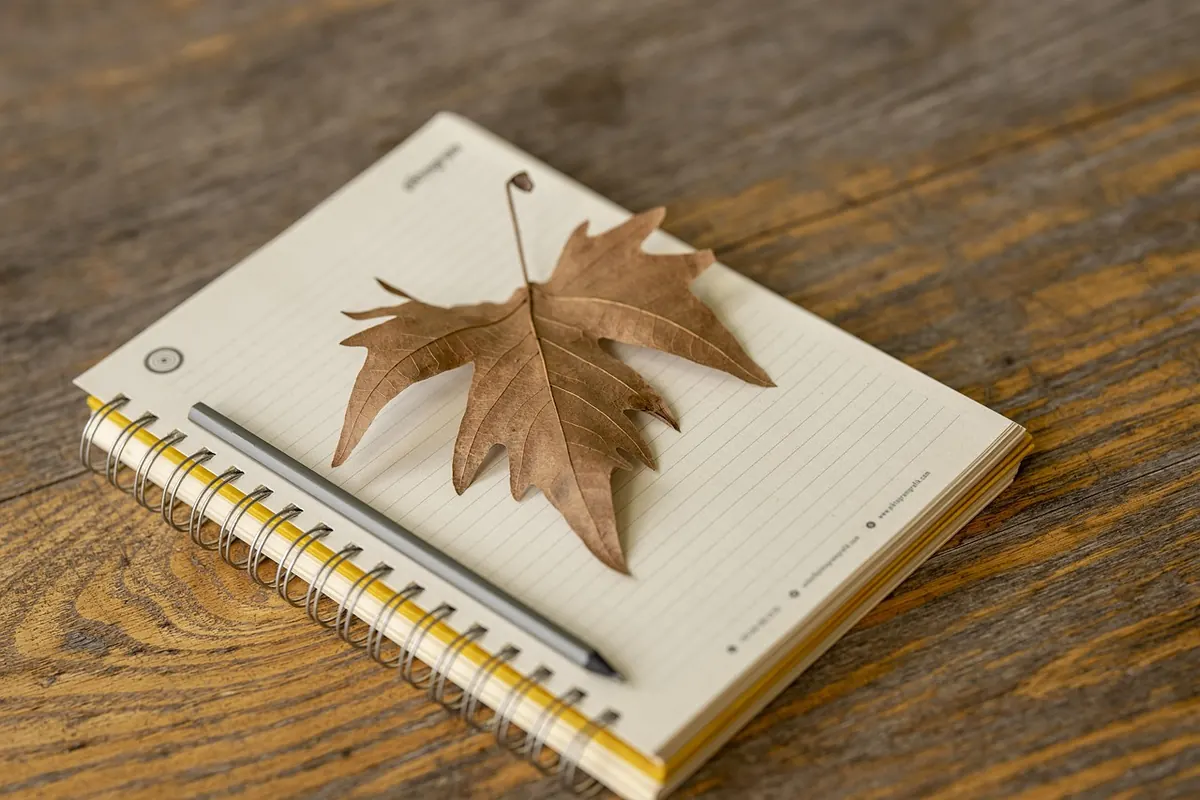
Photo: Engin_Akyurt / Pixabay

Rainy Morning Journaling: A Cozy Routine for Slower Days
A weather-based morning routine that uses rain, tea, and quiet to slow your journaling down—with setup...

Brain Dump vs. Reflective Journaling: What to Write When Your Mind Is Full
A brain dump clears your head; reflective journaling helps you understand it. Here's how to tell which one...
About Us