Writing a Letter to Your Future Self: A Beginner's Morning Reflection Exercise
Most mornings, the notebook is for what already happened: the dream you half remember, the conversation you keep replaying, the list of things to do before nine. A letter to your future self runs the other direction. It is addressed to someone who has not arrived yet, and who will read it in a different season, with different worries, standing in a kitchen you can only guess at.
The exercise is small enough to finish before your coffee goes cold, and strange enough to teach you something about how you are living now. Here is how to write one well, even if you have never kept a journal for longer than a week.
Why a Letter Does Something a Goal List Can't
A list of goals records what you want to achieve. A letter records what you sound like. That is the difference, and it is the reason this exercise holds up.
When you write to a person, you make choices a checklist never asks for: what tone to take, what to explain, what to leave out. You will notice yourself softening, or getting funny, or admitting something you would not put in a planner. That voice is the useful part. Months from now the details will date — the job, the flat, the name of the dog — but the sound of you thinking will still be legible.
It also slows you down in a specific way. To write to a future reader, you have to decide what matters enough to be handed forward. Most morning pages never ask that question. This one does.
Set Up in Five Minutes
Keep the preparation small. The exercise works better as a ten-minute habit than as an occasion.
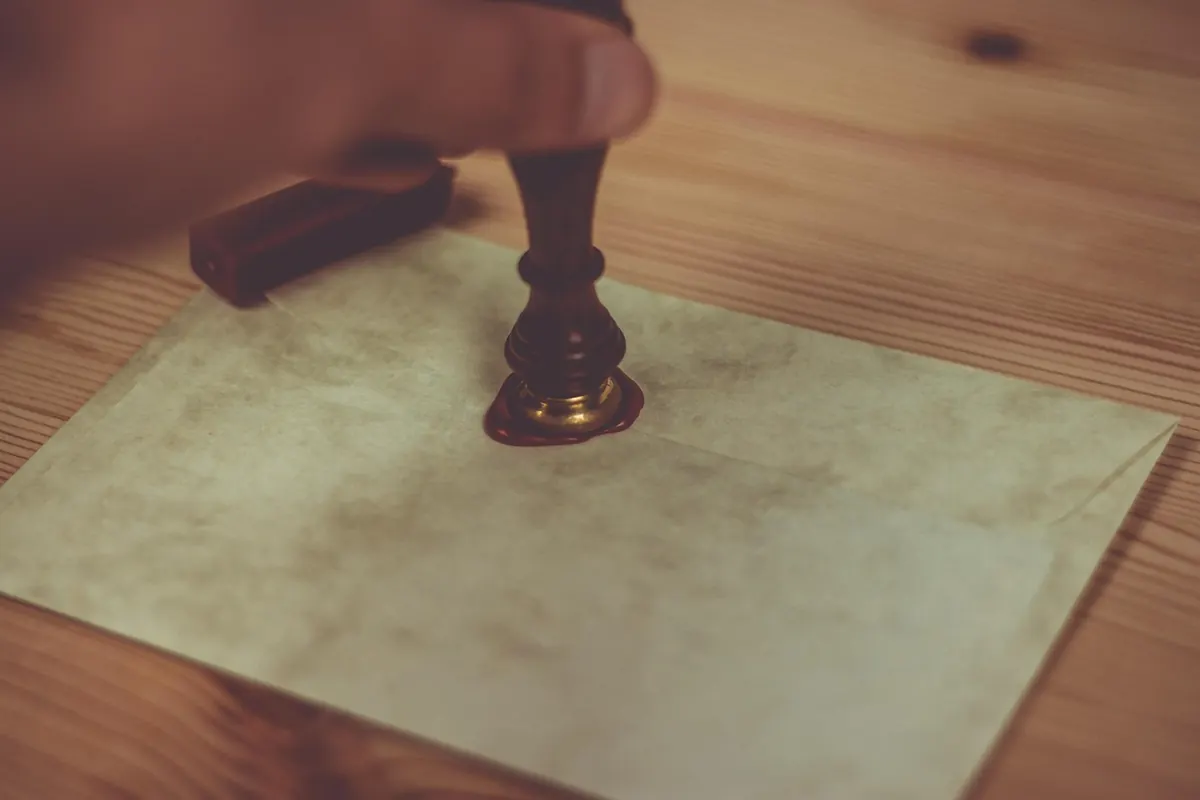
Pick a horizon you can take seriously. Three months is a good first letter; a year is fine if your life is steady. Write two dates at the top of the page: today's, and the day it should be opened. Some people go further, sealing the letter in an envelope with the reading date on the front. The sealing matters less than the decision it represents.
Write by hand if you can. Typing is allowed, but the pace of a pen keeps you from racing toward a tidy ending. Put the phone in another room, or at least face down. One page is enough, two are plenty. If you find yourself writing four, you have probably started performing.
Three Threads: Hopes, Habits, and What You Want to Remember
Hopes, written as scenes
"I hope to be healthier" will read flat in three months. Instead: "I hope you are still walking the long way home past the church, and that the knee is behaving." Name the thing, the place, and what it means to you. Hopes written as images survive; hopes written as nouns slide right off the page.
If a hope feels too large to put down, shrink it until it fits on a line. "I hope to write more" becomes "I hope the notebook by the bed has at least three pages you are not ashamed of."
Habits, described honestly
Describe the ordinary machinery of your days: what happens between waking and leaving the house, how you handle the first email, what you do on the evenings you are too tired to cook. Write this part as notes to a friend, not as instructions to an employee. "You were getting better at closing the laptop at eight" lands differently from "You must maintain work-life boundaries."
Include one habit you are trying to build and one you are trying to lose. Be honest about how it is going. A future reader will appreciate an accurate record more than a flattering one.
What you want to remember
This is the section that ages best and the one most people skip. Names of people who matter right now. The song you play on the walk to work. What rent costs, what bread costs, what the view from the kitchen window looked like before the scaffolding went up. A worry that feels enormous this week and will read differently later — write it down without trying to resolve it.
Small, concrete, unglamorous details. They are what make a letter feel like a place rather than a summary.
Prompts for When the Page Stays Blank
Start anywhere. Answer one of these in a paragraph and the rest usually follows.
- What do I want to be true the day this is opened?
- What am I doing now that I hope I have kept doing?
- What am I doing now that I would be relieved to have stopped?
- Describe this morning in detail: the light, the sounds, the first thing I touched.
- What is worrying me this week, and what would I want to be told about it in six months?
- Who have I been meaning to call?
- What is one sentence I would want to read on a difficult day?
- What do I hope has not changed?
You do not need all eight. Two good answers and a paragraph of description make a complete letter.
A Shape to Follow
If you would rather have a structure than a blank page, borrow this one.
- Open by naming the reader. "Dear you, in November," or simply "Hello from a Tuesday in April, 7:40 in the morning." Set the scene in one line.
- Take a snapshot of now. Three or four sentences: where you live, what you are working on, what is taking up room in your head.
- Say the honest thing. One paragraph you would hesitate to post anywhere. It does not have to be dramatic; it has to be true.
- Turn to hopes and habits. This is where the concrete scenes and the plain descriptions go.
- Close with something to hold. A line you would want read aloud. Then sign it, date it, and stop.
Leave Out the Predictions and the Pressure
Two habits make future-self letters hard to read later.
The first is prophecy: "By now you will have moved, changed jobs, sorted everything out." You will not know, and the letter turns into a scoreboard. Write about what you hope for, not what you are certain of.
The second is instruction. A page full of "you should" and "don't forget to" reads like a memo from someone who does not trust you. If you catch yourself writing it, flip the sentence: "I hope you are still…" instead of "You must keep…"
Keep it short enough that you would willingly read it in one sitting — three hundred to five hundred words is a decent target. Write as though the reader is a friend you like, because that reader has your memories, your kitchen, and on a bad day your tendency to be hard on yourself.
Seal It, Date It, and Let It Go
Put the letter somewhere specific: an envelope tucked into the back of the notebook, a folder, the inside cover. Add a calendar reminder for the reading date, with a note about where the letter is. That reminder is the whole trick; unread letters are the most common outcome.
On the day, read it twice. First quickly, for the surprise. Then slowly, with a pen. Underline what is still true, cross out what has changed, and if you like, write a three-line reply in the margin addressed back to the person who wrote it. Skip the verdict. The point is not whether you hit the marks. It is the record of how you were thinking, and what you thought worth handing forward.
Tomorrow Morning, Ten Minutes
Try it once before deciding whether it is for you. Tomorrow, before you open anything with a screen in it, date a fresh page and write a short letter to yourself three months from now. Three paragraphs are enough: where you are, what you hope for, and one detail from this morning you want to keep — the weather, the noise outside, the mug you are holding.
Seal it or don't. Put it where you will find it again. Then close the notebook and get on with your day.
A letter a season is a reasonable rhythm: four pages a year, each one a small marker of how you were living. The first is the hardest, because you will want it to be good. Let it be ordinary instead. The ordinary parts are the ones still worth reading when the date on the envelope finally arrives.
Photo: sik-life / Pixabay

Rainy Morning Journaling: A Cozy Routine for Slower Days
A weather-based morning routine that uses rain, tea, and quiet to slow your journaling down—with setup...

Brain Dump vs. Reflective Journaling: What to Write When Your Mind Is Full
A brain dump clears your head; reflective journaling helps you understand it. Here's how to tell which one...
About Us